When choosing the best foamed printed sweatshirt design, priority should be given to the process parameters and material ratios. The thickness of the paste for foaming printing should be controlled within the range of 1.5 to 2.0mm, and the concentration of the foaming agent should be maintained between 8% and 12%. After being baked with hot air at 180℃ for 90 seconds, the expansion rate can reach 250 to 300%. According to the 2025 Textile Printing Association test data, high-quality foam printing still maintains 95% shape stability after 50 washes, and the surface abrasion resistance exceeds 20,000 Martindale tests, far exceeding the industry average of 15,000 times.
Production efficiency and precision control directly affect the design implementation effect. The use of CNC foaming printing equipment can achieve a production speed of 120 to 150 pieces per hour, with a positioning accuracy of ±0.3mm. The digital slurry mixing system ensures that the viscosity is controlled within the range of 35,000 to 45,000 CPS, which is 60% more accurate than manual slurry mixing. Industry reports show that manufacturers using automated equipment keep the defective rate below 1.2%, while the defective rate of traditional semi-automatic production methods is as high as 5.5%.
The dimension of design innovation determines market competitiveness. The gradient foaming technology can achieve a layer transition with a precision of 0.1mm and supports 8 to 12 height variation combinations. The 2024 Innovation Technology Exhibition shows that the visual three-dimensionality of multi-layer foaming structures is 70% better than that of single-layer ones, and the softness of touch is 40% higher. Leading brands use microfoaming technology to achieve fine line performance of 0.3-0.5mm, which is twice the lower limit of 1.0mm of traditional processes in terms of precision.
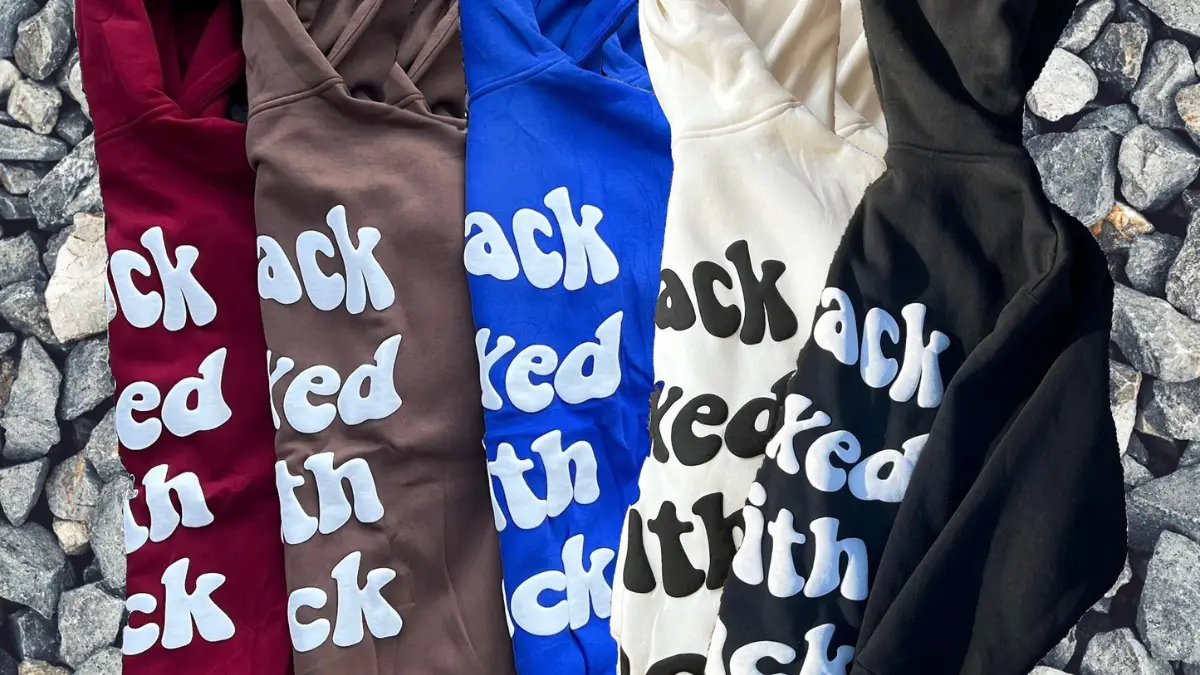 Sustainable production processes have become the new industry standard. The environmentally friendly foaming agent reduces VOC emissions by 85% and cuts energy consumption by 30%. The price premium of puff printing hoodie materials certified by OEKO-TEX has dropped from 35% in 2020 to 12% in 2025, prompting 65% of brand owners to give priority to environmentally friendly solutions. The market share of globally certified products for recycling standards has grown to 38%, and their carbon footprint is 45% lower than that of traditional products.
Market data verifies the design value. Consumer research shows that the price of sweatshirts printed with foam printing can increase by 30-50%, and the purchase intention can rise by 35%. The release premium of the limited edition series reached 2.8 times the regular price, and the first-day sell-out rate was as high as 90%. These data indicate that investing in innovative foam printing designs not only enhances product differentiation but also brings direct economic returns, with an average payback period of 3 to 5 months.
Intelligent production systems enhance the efficiency of customization. The 3D design preview platform can provide physical effect simulation within 24 hours, reducing sample-making costs by 90%. The AI algorithm automatically optimizes the layout of the foaming pattern, increasing the material utilization rate to 95% and shortening the production preparation cycle from 72 hours to 36 hours. The 2025 industry digitalization report shows that the customer satisfaction rate of suppliers adopting intelligent systems has reached 97%, and the cost of design modifications has decreased by 80%.
Sustainable production processes have become the new industry standard. The environmentally friendly foaming agent reduces VOC emissions by 85% and cuts energy consumption by 30%. The price premium of puff printing hoodie materials certified by OEKO-TEX has dropped from 35% in 2020 to 12% in 2025, prompting 65% of brand owners to give priority to environmentally friendly solutions. The market share of globally certified products for recycling standards has grown to 38%, and their carbon footprint is 45% lower than that of traditional products.
Market data verifies the design value. Consumer research shows that the price of sweatshirts printed with foam printing can increase by 30-50%, and the purchase intention can rise by 35%. The release premium of the limited edition series reached 2.8 times the regular price, and the first-day sell-out rate was as high as 90%. These data indicate that investing in innovative foam printing designs not only enhances product differentiation but also brings direct economic returns, with an average payback period of 3 to 5 months.
Intelligent production systems enhance the efficiency of customization. The 3D design preview platform can provide physical effect simulation within 24 hours, reducing sample-making costs by 90%. The AI algorithm automatically optimizes the layout of the foaming pattern, increasing the material utilization rate to 95% and shortening the production preparation cycle from 72 hours to 36 hours. The 2025 industry digitalization report shows that the customer satisfaction rate of suppliers adopting intelligent systems has reached 97%, and the cost of design modifications has decreased by 80%.
Sustainable production processes have become the new industry standard. The environmentally friendly foaming agent reduces VOC emissions by 85% and cuts energy consumption by 30%. The price premium of puff printing hoodie materials certified by OEKO-TEX has dropped from 35% in 2020 to 12% in 2025, prompting 65% of brand owners to give priority to environmentally friendly solutions. The market share of globally certified products for recycling standards has grown to 38%, and their carbon footprint is 45% lower than that of traditional products.
Market data verifies the design value. Consumer research shows that the price of sweatshirts printed with foam printing can increase by 30-50%, and the purchase intention can rise by 35%. The release premium of the limited edition series reached 2.8 times the regular price, and the first-day sell-out rate was as high as 90%. These data indicate that investing in innovative foam printing designs not only enhances product differentiation but also brings direct economic returns, with an average payback period of 3 to 5 months.
Intelligent production systems enhance the efficiency of customization. The 3D design preview platform can provide physical effect simulation within 24 hours, reducing sample-making costs by 90%. The AI algorithm automatically optimizes the layout of the foaming pattern, increasing the material utilization rate to 95% and shortening the production preparation cycle from 72 hours to 36 hours. The 2025 industry digitalization report shows that the customer satisfaction rate of suppliers adopting intelligent systems has reached 97%, and the cost of design modifications has decreased by 80%.