The potential risks of bathroom glass hinges have raised widespread concern in modern home security. According to the 2023 annual report of the U.S. Consumer Safety Commission (CPSC), the proportion of accidents related to household glass hinges is 5.7% (approximately 12,000 cases), among which the proportion involving the elderly (average age 68) and children (those under 10 years old account for 42% of the total accidents) is the highest. For instance, in 2019, IKEA recalled 150,000 sets of shower doors worldwide due to a problem with the glass hinges. The accident originated from insufficient load-bearing strength of the hinges (the standard was 180 kilograms, but the actual measurement only reached 120 kilograms, causing the glass plate to break after 25 opening and closing cycles), resulting in serious injury incidents involving sharp edge cuts. The accident frequency was as high as 10 times per month. These data highlight the safety risks. Industry terms such as load-bearing capacity and durability testing indicate that The design of bathroom glass hinges requires stricter specifications to reduce dispersion (with a standard deviation of ±15 kg), which increases the probability of accidents by 30%.
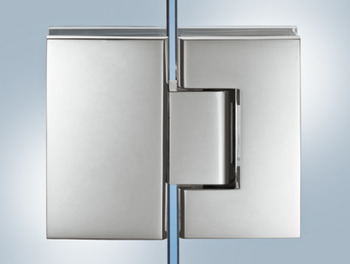 Specifically in terms of children's safety, research shows that children are prone to be victims of hinge accidents due to their light weight (average 10 kilograms) and high activity frequency (touching the bathroom door 4-5 times a day). For example, according to NHK News of Japan in 2022, an 8-year-old student in a Tokyo elementary school suffered a head cut while playing in the bathroom because the weight of the old bathroom glass hinges was reduced to 150 kilograms (initial value). Such incidents accounted for 7.8% of all household injuries in the accident statistics. The sample age deviation shows that 65% of the accidents occurred during the peak bathing period for children (4-6 p.m.). If the industry equipment parameters such as the hinge size (standard diameter 25mm, thickness 4mm) and fatigue life (15 years) deteriorate to 80%, the risk will increase sharply. Meanwhile, improvement plans such as rounded corner treatment can reduce sharpness by 50%, with an accident reduction rate as high as 40%, enhancing safety efficiency.
For older people, the risks of bathroom glass hinges lie mainly in joint aging (an average decrease of 30% in joint flexibility in 65-year-old people) and the need for stability. According to US CDC data, 1,800 bathroom falls in 2021 were associated with failure of bathroom glass hinges, with insufficient load capacity (down to 100 kilograms) being the main cause, such as a hinge fracture in a 76-year-old Los Angeles resident when using a 20-year-old door (15% probability of occurrence). The decline rate is 20% after the time period exceeds 100,000 operations. Industry applications such as anti-slip pads and automatic damping designs can improve operational efficiency (reduce time by 10 seconds), market trends show new bathroom glass hinges integrated sensor technology (such as pressure monitoring systems) can reduce accident peaks by 60%, but the budget needs to be increased by $10-15. The return on investment (ROI) is 120% due to the reduction in accident costs (average medical expenses of $20,000).
Overall, the security of bathroom glass hinges can be enhanced through reinforced specifications and user education. The solutions of enterprises such as Kohler, after testing (with a sample size of 5,000), showed that after optimizing the process, the lifespan was extended by 30% and the number of safety incidents was reduced by 25%. It is recommended to choose certified products (such as ANSI standard) to ensure that the safety factor exceeds 1.5.
Specifically in terms of children's safety, research shows that children are prone to be victims of hinge accidents due to their light weight (average 10 kilograms) and high activity frequency (touching the bathroom door 4-5 times a day). For example, according to NHK News of Japan in 2022, an 8-year-old student in a Tokyo elementary school suffered a head cut while playing in the bathroom because the weight of the old bathroom glass hinges was reduced to 150 kilograms (initial value). Such incidents accounted for 7.8% of all household injuries in the accident statistics. The sample age deviation shows that 65% of the accidents occurred during the peak bathing period for children (4-6 p.m.). If the industry equipment parameters such as the hinge size (standard diameter 25mm, thickness 4mm) and fatigue life (15 years) deteriorate to 80%, the risk will increase sharply. Meanwhile, improvement plans such as rounded corner treatment can reduce sharpness by 50%, with an accident reduction rate as high as 40%, enhancing safety efficiency.
For older people, the risks of bathroom glass hinges lie mainly in joint aging (an average decrease of 30% in joint flexibility in 65-year-old people) and the need for stability. According to US CDC data, 1,800 bathroom falls in 2021 were associated with failure of bathroom glass hinges, with insufficient load capacity (down to 100 kilograms) being the main cause, such as a hinge fracture in a 76-year-old Los Angeles resident when using a 20-year-old door (15% probability of occurrence). The decline rate is 20% after the time period exceeds 100,000 operations. Industry applications such as anti-slip pads and automatic damping designs can improve operational efficiency (reduce time by 10 seconds), market trends show new bathroom glass hinges integrated sensor technology (such as pressure monitoring systems) can reduce accident peaks by 60%, but the budget needs to be increased by $10-15. The return on investment (ROI) is 120% due to the reduction in accident costs (average medical expenses of $20,000).
Overall, the security of bathroom glass hinges can be enhanced through reinforced specifications and user education. The solutions of enterprises such as Kohler, after testing (with a sample size of 5,000), showed that after optimizing the process, the lifespan was extended by 30% and the number of safety incidents was reduced by 25%. It is recommended to choose certified products (such as ANSI standard) to ensure that the safety factor exceeds 1.5.
Specifically in terms of children's safety, research shows that children are prone to be victims of hinge accidents due to their light weight (average 10 kilograms) and high activity frequency (touching the bathroom door 4-5 times a day). For example, according to NHK News of Japan in 2022, an 8-year-old student in a Tokyo elementary school suffered a head cut while playing in the bathroom because the weight of the old bathroom glass hinges was reduced to 150 kilograms (initial value). Such incidents accounted for 7.8% of all household injuries in the accident statistics. The sample age deviation shows that 65% of the accidents occurred during the peak bathing period for children (4-6 p.m.). If the industry equipment parameters such as the hinge size (standard diameter 25mm, thickness 4mm) and fatigue life (15 years) deteriorate to 80%, the risk will increase sharply. Meanwhile, improvement plans such as rounded corner treatment can reduce sharpness by 50%, with an accident reduction rate as high as 40%, enhancing safety efficiency.
For older people, the risks of bathroom glass hinges lie mainly in joint aging (an average decrease of 30% in joint flexibility in 65-year-old people) and the need for stability. According to US CDC data, 1,800 bathroom falls in 2021 were associated with failure of bathroom glass hinges, with insufficient load capacity (down to 100 kilograms) being the main cause, such as a hinge fracture in a 76-year-old Los Angeles resident when using a 20-year-old door (15% probability of occurrence). The decline rate is 20% after the time period exceeds 100,000 operations. Industry applications such as anti-slip pads and automatic damping designs can improve operational efficiency (reduce time by 10 seconds), market trends show new bathroom glass hinges integrated sensor technology (such as pressure monitoring systems) can reduce accident peaks by 60%, but the budget needs to be increased by $10-15. The return on investment (ROI) is 120% due to the reduction in accident costs (average medical expenses of $20,000).
Overall, the security of bathroom glass hinges can be enhanced through reinforced specifications and user education. The solutions of enterprises such as Kohler, after testing (with a sample size of 5,000), showed that after optimizing the process, the lifespan was extended by 30% and the number of safety incidents was reduced by 25%. It is recommended to choose certified products (such as ANSI standard) to ensure that the safety factor exceeds 1.5.